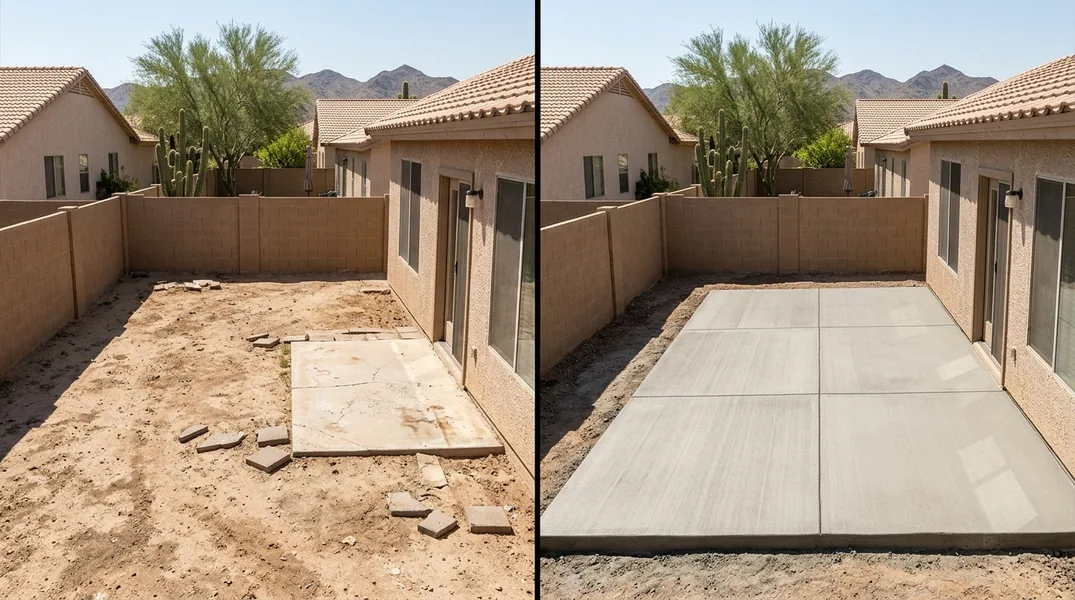
Concrete vs. Pavers Mesa: Understanding Your Options
When it comes to upgrading your driveway or patio in Mesa, you're likely weighing two popular choices: concrete and pavers. Both materials have earned their place in Arizona landscaping, but they offer distinctly different benefits and drawbacks. Understanding the differences between these options is essential before making an investment that will shape your property's curb appeal and functionality for years to come.
Concrete is a monolithic surface created by pouring a mixture of cement, sand, gravel, and water into a prepared base, where it hardens into a solid slab. Pavers, by contrast, are individual units (typically made from concrete, brick, or stone) that are laid side by side on a compacted sand base. This fundamental difference in installation and structure affects everything from durability to maintenance to overall appearance. Both materials can transform your outdoor space, but the choice depends on your priorities, budget, and long-term vision for your home.
Durability and Longevity: How Long Will Each Last?
Concrete Driveways are known for their impressive lifespan when properly installed and maintained. A well-constructed concrete driveway in Mesa can easily last 25 to 40 years or more, even in Arizona's intense heat and occasional freeze-thaw cycles. Concrete's monolithic structure means there are no joints between sections (except for intentional expansion joints), which reduces the number of entry points for water and debris. However, concrete is susceptible to cracking over time, particularly in Arizona's climate where temperature fluctuations and direct UV exposure can stress the material.
Pavers typically offer a lifespan of 15 to 25 years, though some high-quality units can last longer with proper care. The advantage of pavers is their modularity: if individual units crack or become damaged, you can replace just those pieces rather than resurfacing an entire section. This makes pavers easier to repair in the long run, though repairs may be more frequent than with concrete. In Mesa's dry climate, pavers actually perform quite well because there's less freeze-thaw stress, but the sand base underneath can shift over time, leading to uneven surfaces that require releveling.
Maintenance Requirements: What Does Each Demand?
Concrete requires relatively low maintenance compared to many outdoor surfaces. Periodic sweeping, occasional power washing, and seal coating every two to three years will keep your concrete in good shape. Concrete Repair & Resurfacing services are available when cracks develop or the surface becomes worn, and these repairs are typically straightforward and cost-effective. The key to longevity is addressing small issues before they become major problems. In Mesa's climate, protecting concrete from UV damage and thermal stress is important, which is why many homeowners opt for quality sealers.
Pavers demand more hands-on maintenance. The joints between pavers can accumulate dirt, debris, and weeds, requiring regular cleaning and occasional resealing. The sand base needs monitoring because it can wash away during heavy rains or shift due to ground movement, causing pavers to settle unevenly. You'll need to add sand periodically and may need to re-level sections of your patio or driveway. Additionally, if you want to prevent weed growth between pavers, you'll either need to apply weed killer regularly or use polymeric sand, which costs more upfront but reduces maintenance. For homeowners who prefer a lower-maintenance option, concrete typically wins this category.
Cost Comparison: Concrete vs. Paver Installation Arizona
When evaluating pricing for these two options, it's important to consider both initial installation costs and long-term maintenance expenses. Concrete generally has a lower upfront cost, typically ranging from 8 to 12 dollars per square foot for a basic installation, though this can vary based on site conditions, base preparation, and finishing options. If you're interested in Stamped & Decorative Concrete, you can expect to pay more, but you'll achieve a custom aesthetic that rivals or exceeds what pavers offer. The total cost for a 500-square-foot driveway in concrete might range from 4,000 to 6,000 dollars, depending on these variables.
Paver installation typically costs more upfront, ranging from 15 to 25 dollars per square foot or higher, depending on the quality and type of pavers you choose. That same 500-square-foot project could cost 7,500 to 12,500 dollars or more. However, pavers offer design flexibility and the ability to replace individual units, which can offset some long-term costs. When budgeting, factor in maintenance: concrete's seal coating and occasional repairs versus pavers' regular cleaning, sand replenishment, and more frequent repairs. Over a 20-year period, concrete often proves more economical, though the gap narrows if you invest in high-end decorative concrete options. For a detailed breakdown of what your specific project might cost, we recommend reaching out for a free estimate from Mesa Concrete.
Aesthetic Appeal and Design Flexibility
Pavers have a clear advantage when it comes to immediate visual variety. They come in numerous colors, patterns, textures, and materials, allowing you to create intricate designs, borders, and custom layouts that make your driveway or patio truly unique. If you love the look of natural stone, brick, or geometric patterns, pavers offer endless possibilities. Many homeowners are drawn to pavers specifically for their design potential, especially for Concrete Patios where aesthetic impact is paramount.
Concrete shouldn't be dismissed as a bland alternative, however. Modern concrete finishes include stamped patterns that mimic stone, brick, or tile; colored concrete that complements your home's architecture; polished finishes that create a sleek, contemporary look; and exposed aggregate surfaces that add texture and visual interest. Stamped and decorative concrete can rival or exceed the visual appeal of pavers while maintaining the durability and lower maintenance benefits of traditional concrete. For homeowners in Mesa seeking both beauty and practicality, decorative concrete options provide an excellent middle ground. Your choice here depends on whether you prioritize variety and intricate design work (pavers) or prefer a customizable but more unified aesthetic (concrete).
Which Option Is Best for Your Mesa Home?
The answer to whether concrete or pavers are best for your driveway or patio depends on your specific priorities. Choose concrete if you value durability, lower maintenance, cost-effectiveness, and longevity. Concrete is ideal for homeowners who want a reliable surface that requires minimal upkeep and won't break the budget. It's particularly appealing if you're interested in decorative finishes that provide aesthetic appeal without the maintenance demands of pavers. Choose pavers if you prioritize design flexibility, enjoy maintaining outdoor spaces, and are willing to invest more upfront for a customizable appearance. Pavers work well if you like the ability to replace individual damaged units and want a surface that feels less industrial than concrete.
Before making your final decision, consider Arizona's climate. Mesa's intense sun, occasional freeze-thaw cycles, and minimal rainfall all affect how these materials perform. Concrete handles thermal stress reasonably well when properly sealed, while pavers excel in dry climates but require more attention to base stability. Your home's architectural style, your lifestyle preferences, and your budget all play important roles. If you're still uncertain, the team at Mesa Concrete can help you evaluate both options during a consultation. Call us at (623) 526-6494 or visit our website to schedule your free estimate and discuss which solution best fits your home and needs.
Looking for a professional tree service in Mesa? Mesa Concrete responds fast for all your concrete needs.
Get a Free QuoteOur services: Concrete Driveways · Concrete Patios · Stamped & Decorative Concrete