Understanding Caliche: The Hidden Enemy Beneath Your Driveway
If you own property in Mesa, you've likely heard the term caliche thrown around by contractors and neighbors alike. But what exactly is it, and why should you care about a layer of soil beneath your concrete? Caliche is a natural cement-like deposit that forms when calcium carbonate accumulates in desert soils over thousands of years. In the Arizona climate, this mineral-rich layer sits just below the surface, creating what amounts to a rock-hard crust that can wreak havoc on concrete installations.
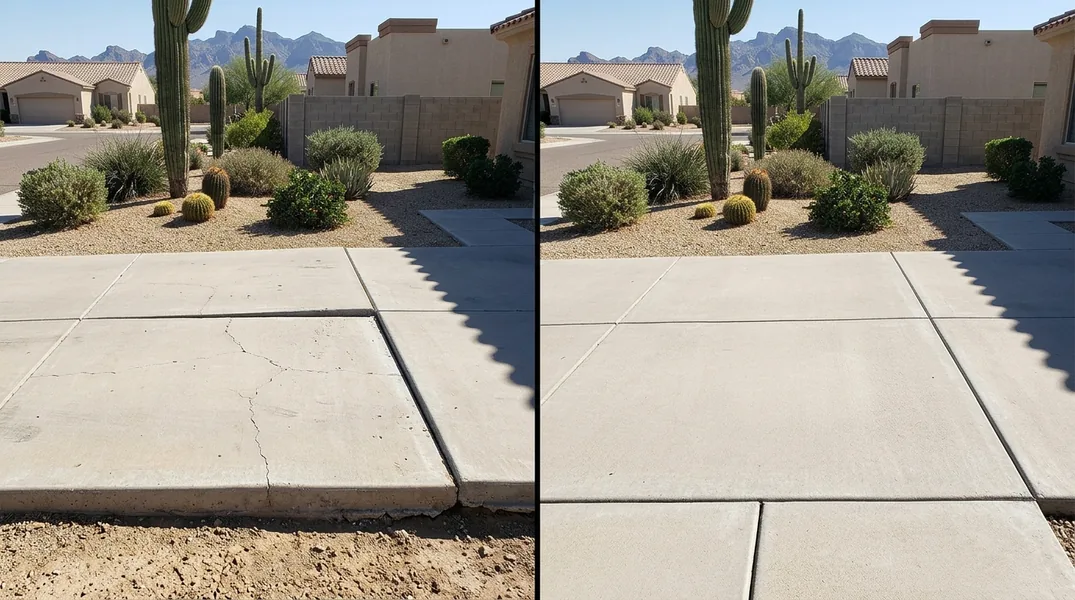
The problem with caliche becomes apparent when contractors try to prepare a foundation for Concrete Driveways or Concrete Patios. When caliche isn't properly removed or managed during installation, the concrete poured on top sits on an unstable, uneven base. Over time, pressure from freeze-thaw cycles, moisture changes, and the weight of vehicles causes the concrete to crack, settle unevenly, and develop the telltale spiderweb fractures that signal foundation trouble. Many homeowners don't realize their driveway problems stem from what's happening underground until cracks become severe enough to require Concrete Repair & Resurfacing.
Expansive Soil and Foundation Cracking: Why Your Concrete Moves
Beyond caliche, Mesa sits atop expansive clay soils that present their own unique challenges. Expansive soil contains minerals like montmorillonite that absorb water and swell dramatically when moisture is present, then shrink as they dry out. This constant cycle of expansion and contraction creates movement beneath your concrete that no amount of quality installation can fully prevent without proper mitigation strategies. A driveway that looks fine in spring may develop hairline cracks by summer as the soil beneath it shifts and settles.
The damage from expansive soil foundation cracking isn't always immediate or obvious. You might notice a subtle slope in your driveway, a gap forming between the concrete and your garage, or small cracks that seem to grow wider each season. These are all signs that the soil beneath is moving. Unlike cracks caused by poor concrete quality or improper installation, cracks from expansive soil are a natural consequence of building on desert terrain. This is why working with contractors who understand local soil conditions and know how to design concrete systems that accommodate movement is critical for long-term durability.
Desert Soil Concrete Problems: Why Standard Solutions Don't Always Work
Many homeowners make the mistake of assuming that concrete is concrete, and that a driveway installed in Mesa will perform the same as one installed in a humid climate or cooler region. This assumption leads to disappointment and expensive repairs. Desert soil concrete problems require a fundamentally different approach because the environment and soil composition are so different from other parts of the country. Standard concrete specifications that work fine in California or Colorado often fail in Arizona because they don't account for the aggressive mineral content of caliche soils or the expansive nature of clay-heavy terrain.
The heat in the desert also accelerates concrete degradation in ways that aren't always obvious to property owners. Intense UV exposure breaks down the concrete surface, while the extreme temperature swings between day and night create stress that standard concrete mixes aren't designed to handle. Add in the occasional heavy rain that saturates expansive soils, and you have a perfect recipe for cracking, spalling, and premature failure. This is why contractors experienced in desert construction specify thicker base preparations, use specialized concrete mixes, and incorporate proper drainage solutions that contractors from other regions might overlook entirely.
How Caliche Soil Concrete Damage Develops Over Time
Caliche soil concrete damage doesn't happen overnight. The process is gradual, which is why many homeowners don't take action until the problem becomes severe. When concrete is poured directly on top of caliche or on inadequately prepared caliche-laden soil, the initial installation might look perfect. The concrete cures, and for the first year or two, you may see no signs of trouble. But beneath the surface, moisture is infiltrating the soil, freeze-thaw cycles are creating micro-movements, and the uneven support is slowly working the concrete like a fulcrum and lever.
As time passes, small cracks begin to appear, often starting at corners or along the edges where stress concentrations are highest. These initial cracks allow water to penetrate deeper into the concrete and the soil beneath, accelerating the deterioration process. The water freezes in winter, expands, and pushes the concrete upward in a process called heaving. By the time a homeowner calls for help, the damage is often extensive enough to require professional Concrete Repair & Resurfacing rather than a simple seal coat or minor patching. Understanding this timeline is important because it underscores why proper foundation preparation during initial installation is so much more cost-effective than dealing with damage later.
Protecting Your Concrete: Solutions for Mesa's Challenging Soil
The good news is that caliche and expansive soil problems are manageable when approached with proper planning and expertise. The first and most critical step is having a professional site assessment before any concrete work begins. This assessment should include soil testing to identify caliche layers, expansive soil indicators, and drainage patterns specific to your property. Armed with this information, contractors can specify the right base preparation, concrete mix design, and reinforcement strategy to ensure your concrete performs well for decades rather than developing problems within a few years.
Proper base preparation is non-negotiable in Mesa. This means removing or properly treating caliche, compacting the soil with the right equipment, and installing adequate base materials like recycled asphalt or gravel that can accommodate soil movement without transferring excessive stress to the concrete above. Drainage is equally important, as controlling moisture prevents expansive soils from cycling through extreme expansion and contraction. Reinforcement with rebar or wire mesh helps concrete resist the cracking that occurs when movement happens beneath it. Finally, the concrete mix itself should be specified for desert conditions, with the right air entrainment, strength rating, and curing protocol to handle the harsh Arizona climate.
When to Call a Professional: Concrete Repair Near Me in Mesa
If you're seeing cracks in your driveway, patio, or foundation, don't wait to see if they'll go away on their own. Concrete damage from soil issues tends to accelerate once it begins, and early intervention can prevent expensive, extensive repairs down the road. The question isn't whether you need professional help, but when you should reach out. Small cracks that are less than one-eighth inch wide and not actively growing might be monitored for a season, but anything wider or actively expanding warrants a professional evaluation.
Mesa Concrete specializes in diagnosing concrete problems caused by local soil conditions and designing repair solutions that actually address the root cause rather than just treating the symptom. Whether your issue is a cracked driveway, settling patio, or foundation movement, our team understands the unique challenges of building on desert soil. We recommend getting a free estimate to understand what's happening beneath your concrete and what options are available to fix it. You can also call us at (623) 526-6494 to discuss your specific situation. Early action often means the difference between a straightforward repair and a complete replacement, so don't delay if you suspect soil-related damage.
Looking for a professional tree service in Mesa? Mesa Concrete responds fast for all your concrete needs.
Get a Free QuoteOur services: Concrete Driveways · Concrete Patios · Stamped & Decorative Concrete